When your case turns on what is on a phone, a laptop, or in an account
Litigators retain us when the evidence is digital and the other side will fight over it.
We acquire it with write-blocked imaging and hash verification, document the chain of custody, and authenticate it under FRE 901 and the self-authentication provisions of FRE 902(13)/(14). We build every engagement to survive a Daubert challenge, with methodology a court can test and a deposition and trial record behind it.
Whether a given exhibit is ultimately admitted is the court’s call; our job is to give you findings that hold up when they are challenged.
This is the litigation-support spoke of our forensic services for law firms hub.
Related attorney work runs through forensic phone extraction, cybersecurity expert witness testimony, e-discovery and ESI collection, and digital forensics for divorce. See also spoliation in family-law digital evidence.
Engagements are confidential and structured to begin within 48 hours of the consultation.
Some service tracks are offered at a fixed fee; complex investigations are billed at a flat $400/hr against a $5,000 refundable retainer, with a clear scope, milestone updates, and a cap agreed up front.
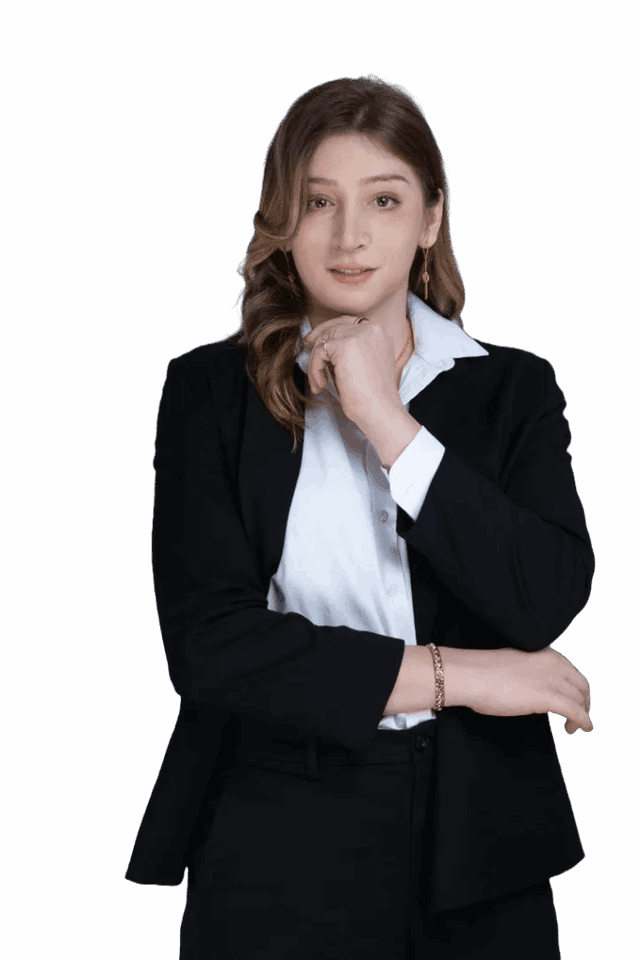
Quinn (Founder and CEO) oversees every engagement and reviews every case before findings leave the practice; the practitioner team executes the technical work under her methodology.
- A direct line to Quinn, the founder, not a sales pipeline.
- Worked in-house by the examiner who scoped it.
- Explainable findings you can verify, with the methodology shown.
What this means for you
- Written scope before any work. You see a written scope covering deliverables, timeline, and price, and you approve it before we begin. You are never billed for work you did not authorize.
- We commit to findings, not outcomes. We tell you up front what the evidence can and cannot establish. Recovery, attribution, and prosecution are decided by banks, platforms, insurers, and courts. We produce the record they act on, and we put that distinction in writing.
- Every case is investigated, not just scanned. A credentialed examiner reviews every case before findings leave the practice. You get a documented investigation to court-admissible standards, not a single automated scan and a one-line answer.
- We will tell you if you do not need us. If a free or simpler step would resolve your situation, whether a police report, an IC3 filing, or a platform's own recovery flow, we point you there first.
The process, end to end
Most forensic vendors describe their process in a sentence.
Opposing counsel will examine yours for an hour.
This is the workflow every engagement runs, stage by stage, so you know what the record will show before you retain us.
- Identification and scoping. Which devices, accounts, and data sources plausibly hold the evidence; what the preservation obligations already are; what can be acquired lawfully and with whose authorization. You get a written scope before any acquisition begins.
- Preservation and intake. Chain-of-custody documentation starts at intake, with tamper-evident packaging for shipped devices, a custody form signed at every handoff, and a preservation letter template for custodians when counsel wants one.
- Write-blocked acquisition with two-hash verification. Devices are imaged behind a write blocker; an acquisition hash is computed when the image is taken and a verification hash is computed on the working copy before analysis, so the record shows the copy analyzed is the copy acquired. The methodology follows NIST SP 800-86 and SWGDE practice. Where a matter requires Cellebrite, Magnet AXIOM, or a similar extraction platform, we engage those platforms through our partner network.
- Analysis at the artifact level. Findings are tied to named file-system metadata, application databases, and account and sync logs, documented precisely enough that another examiner could retrace the path. That reproducibility is what a reliability challenge actually tests.
- Report. Written to the structure Rule 702 examinations follow: data relied on, method applied, how the method was applied to the data, and conclusions stated with method-bounded confidence that go no further than what the artifacts support. See what goes into a court-ready forensic report.
- Testimony support. Declarations, FRE 902 certifications, deposition preparation, and trial support. Quinn is prepared to testify on any report the practice issues.
Authentication under FRE 901, and self-authentication under 902(13)/(14)
Digital evidence gets admitted the same way everything else does: a foundation.
FRE 901(b) lists the routes of witness testimony, distinctive characteristics, and process-or-system evidence.
For electronic records there is a faster path: under FRE 902(13) a certification of a qualified person can authenticate records generated by a process or system, and under FRE 902(14) the same mechanism covers data copied from a device, storage medium, or file, and the committee note names hash-value comparison as the canonical digital-identification process.
That is not paperwork we bolt on afterward.
Our workflow captures the acquisition and verification hashes a Rule 902(14) certification requires, and our examiner prepares those certifications for counsel.
Notice matters: the rule’s advance-notice procedure means the certification should be planned with your disclosure calendar, not the week before trial.
For the foundations themselves, start with authenticating text messages under FRE 901/902 and chain of custody for litigators.
What 902(13) and 902(14) do not do
Honesty about the limits is part of the foundation.
A 902(13)/(14) certification settles authenticity of the copy or the process, establishing that the data is what it purports to be and the copy matches the original.
It does not resolve hearsay, relevance, or authorship: a certified extraction proves the messages came off that phone intact, not who typed them.
And whether a given examiner is a “qualified person” is decided by the court on the record before it, matter by matter.
Any vendor who tells you 902(14) makes evidence “automatically admissible” is overselling the rule.
The December 2023 amendment to Rule 702
Rule 702 was amended effective December 1, 2023: the proponent must now show it is more likely than not that each admissibility requirement is met, and subsection (d) was reworded to require that the opinion reflect a reliable application of the method to the facts.
The committee note speaks directly to this field, saying forensic experts should avoid assertions of absolute or one hundred percent certainty.
That is how our reports were already written: conclusions carry the confidence the method supports, stated so the court can see where the data ends and the inference begins.
If the expert you are vetting states conclusions without bounds, the 2023 note is now the cross-examination script against them.
Background: how to vet and qualify a forensic expert.
Spoliation and preservation
When the question is whether the other side deleted evidence, the analysis changes shape: wiping and deletion timestamps, wiping-tool traces, and mass-deletion patterns in file-system metadata are identifiable where present, and FRCP 37(e) frames what a court can do about ESI that should have been preserved and was lost.
That work has its own service page: spoliation forensic analysis.
For the preservation side, send custodians a litigation-hold template that actually covers a phone.
How an engagement begins
- Confidential consultation. NDA-protected. 30-60 minutes. Direct conversation, no sales process.
- Scoped engagement. Written proposal with defined deliverables and pricing, a fixed fee where it applies and hourly with milestone caps for open-ended investigations.
- Investigation and findings. Court-ready standards. Written report you can act on.
Why this work matters
In litigation the methodology behind a finding gets tested as hard as the finding itself, so it has to hold up under cross-examination and a Daubert challenge.
Quinn holds 9 active certifications across GIAC, a methodology trusted by Fortune 50 enterprises, defense contractors, and the attorneys who refer to us.